
Coaching is Teaching
Why great coaching environments create better learning.
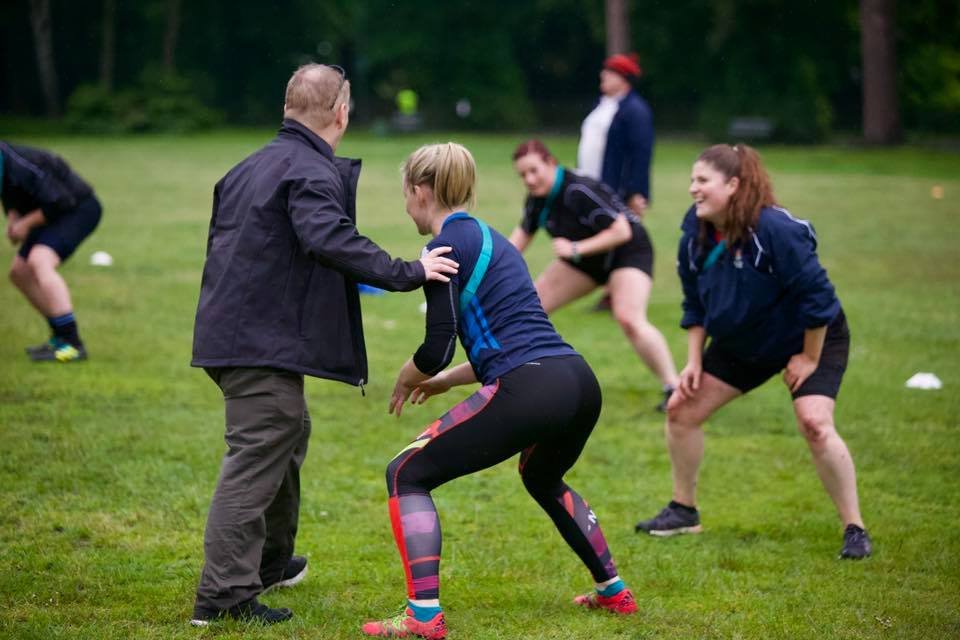
Players with tight cores and stacked shoulders: neutral hips, chest up, eyes forward — small details that build resilience in rugby and contact sports. However, they don’t need to be done in stale boring line-ups…
Go for a walk one Thursday afternoon. Many coaching sessions you come across look organised, but very little learning is actually happening. Players line up in columns. They wait their turn. They repeat drills. The coach talks (and talks, and talks...)… It’s the same in most sports no matter the context.
From the outside, the session may look structured. I have worked at ‘sporty’ type schools where this is what the principal wants. She/he, believes this is what parents or community members walking past PE classes expect. That’s probably right. But it doesn’t mean this is best for learning. When players aren’t preparing for military engagements, bungy jumping etc, there are other opportunities and as you will hear me and many experienced educators say, “it depends'“…
But it must be said games are never ‘structured’ in closed environments. Games are about reading situations, making decisions, interacting with teammates, opponents, officials, even the crowd, and much, much more.
To prepare coaches and PE teachers best I like to remind them of US legendary basketball coach John Wooden said, “Coaching is teaching.”
Coaching is teaching!
The role of the coach is not just to organise activity or give instructions. It’s not about yelling. It’s not about rolling the ball out and letting them work out stuff for themselves. I don’t believe you are teaching here on the whole.
The role of the coach is to create learning environments where athletes begin to understand the game.
The Coach as Teacher
Many of the most respected coaches in sport have understood this idea.
Like John Wooden, most of the greats often described coaching in educational terms. In Australia, many successful coaches have also been school teachers, particularly physical education teachers. And, it stand to reason: Teaching and coaching share the same goal: Helping people learn.
In both settings, the environment matters. The questions matter. The behaviour of the teacher or coach matters. “Pedagogy” is a word teachers understand and its Greek roots mean, ‘to lead (guide) the child’. It doesn’t say that there is one magic bullet. There are many, many ways to ‘guide’.
In summary here, learning rarely happens because someone simply explains what to do. Learning happens when people begin to recognise patterns and understand situations for themselves.
Learning Through the Game
When coaching is approached as teaching, the session begins to look different. Players interact more. They move, respond and make decisions. Instead of long explanations, the coach observes, asks questions and shapes the activity so learning can emerge through the game itself. Athletes begin to develop awareness of space, pressure, timing and opportunity. Over time they learn to read the game rather than simply follow instructions.
“Most coaches of girls and young women should do pre and post tests of players’ handstands. If they all can hold them longer at the end of the season, it can often mean you have kept them waiting for turns at the ball. You’ve made an impact, but not the impact you planned for...”
A Different Way to Coach
This approach does not mean the coach does less. In many ways it requires more awareness. The coach must watch closely, recognise what players are experiencing and create situations that help athletes learn. The focus shifts from controlling players to designing learning environments.
A Simple Principle
At its heart, the idea is straightforward: Coaching is teaching.
When coaches begin to think like teachers, sessions become environments where players can explore, notice patterns and begin to understand the game. Stick with me and you’ll learn about the art and craft of coaching. I might even mention the word ‘pedagogy’ again… You are the ‘guide’ only. A shepherd.
And that is where real learning begins.
“Let them explore. Stand back and notice your own behaviours first...”
Part of the Coaching is Teaching Series:
• Coaching is Teaching
• What Do You Notice?
• Hook ’Em In
• Start With the Game
• Let Them Explore
• Shape the Environment
• Coaching Behaviour Matters
• Keeping Kids in Sport
Sources to reflect with
Important - There is nothing new under the sun:
Many ideas connect to broader coaching and education work for coaches as teacher.
Coaches can read Robyn Jones’s The Coach as Educator, Chapter 2 “Coaching Pedagogy” in the Routledge Handbook of Coaching Children in Sport (Pill & SueSee), and related teaching, physical education and coaching pedagogy research.